Click here to evaluate my assignment.
Name : Ami Trivdi
Roll no : 03
Class : M.A
Sem : 2
Enrollment no : 2069108420170029
Topic : What is Cultural Studies.? Postmodernism and Popular Culture
Year : 2016-2018
Email id : amitrivedi4288@gmail.com
Submitted to : Smt.S.B.Gardi Dept.of
English M.K.B.University
What is Cultural Studies.?
Cultural studies an innovative interdiscipline field of research and teaching that investigates the ways in which “culture” creates and transforms individual experiences, everyday life, social relations and power. Reseach and teaching in field explores the relations between culture understood as human expressive and symbolic activites and cultures understood as distinctive ways of life.
Cultural life is not only concerned with symbolic communication, it is also the domain in which we set collective tasks for ourselves and being to grapple with them as changing communities. Cultural studies devoted to understanding the processess through which societies and the diverse groups within them come t terms with history, community life, and the challenges of the future.
Cultural Studies: Like a Kid in an Analytical Candy Store
Think of cultural studies as the equivalent to Willy Wonka's Chocolate Factory: it may not involve quite as many people drowing in chocolate or turning into giant blueberries, but it's a theoretical theme park where you open the door and you are spoiled sweet for choice. A couple of things that are delicious about cultural studies are that it doesn't have just one theoretical approach , like some more traditional forms of literary theory, it doesn't confine itself to ane narrow corner of literature or culture. Sure , individual projects may target particular areas, but that's the point- cultural studies let's you choose what works. It's like the golden ticket of the theory world!
Cultural theorist study all sorts of texts and, unlike traditional literary studies, are as comfortable with contemporary culture and pop culture as with classics by Mlton, Dickens, and all their dead white guy friends.
Formation of Cultural Studies :
Cultural studieas is conceened with describing the ways cultural forms and practies are produced within, interested into, and operate in and effect the eceryday life of human beings and social formations, so as to reproduce, struggle against, and perhaps transform the existing structures of power. Cultural studies explores the historical possibilities of transforming people's lives by trying to understand the relationships of power within which individual realities are constructed.
Cultural Studies, Theor, and Power
The measure of a theory's truth is its ability to enable a better understanding of a particular context and to open up new-or at least imagined-possibilities for changing that context. In this sense, cultural studies desacralize theory in order to take it up as a contingent strategic resource. Thus cultural studies cannot be identifid with any single theoretical paradigm or tradition; it continues to wrestle with various modern and postmodern philosophies. The project of cultural studies, then, is a way of politizing theory and the theorizing politics. Cultural studies is always interested in how power infilteates, contaminates, limits and empowers the possibilities that people possess to live their lives in dignified and secure ways. Cultural studies also approaches power and politics as complex, contingent, and contextual phenomena and refuses to reduce power to a single dimension or axis.
The question of what cultural studies will look like only answerable within the particular context that calls cultural studies into existence. Cultural studies is not alone in privileding the questions of power or in its commitment to relationality and contextuality or in reognizing the importance of culture.
Diversity in Cultural Studies :
The diversity of cultural studies is as importance as its unity; yet there is no obvious single best way to organize or describe that diversity. One could display the range of objects and discourses that cultural studies has explored- including art, popular culture, media culture, news, political discourses, economies, development practies, everyday practies, organizations, cultural nstitutions. One could display the different political agendas- feminist, marxist, anti-homophobic, anti-postcolonial. One could discribe the implications of disciplinary diversity- literary studies, anthropology, sociology, communication, history, education, and geography.
The first model found in the work of Raymond Williams, reads texts as ideologies in context. That is, it uses texts to try to locate and define the common structure that unites the disparate elements of social formation into a unified social totality.
The second model, found in the work of communication scholar James Carey, looks at particular cultural practices as rituals that reenact that unity-shared meanings, structures, and identities-of a community.
The third model locates cultural texts and practices within a dialectic od domination and resistance and was closely associated wit the CCCS in the 1970s, especially in the early work of David Morley, Dick Hebdige, and Angela McRobbie.
The fourth model explores cultural and identities as coplex sets of relations. It involves the production of differences within a population, the effort to naturalize such identities as biological, the distribution of people into those cateories, and the assignment of particular meanings to each identity.
The fifth model is concerned wit the relationship betwee cultural and the state. Influenced in part by Gramsci, such work was best illustrated by the important work of Stuart Hall and John Clarke on hegemony as an alternative to notions of civil politics as ideological consensus.
The sixth model of “ governmentality “ emphasizes the variety of ways in which culture is used by state and other institutions to produce particular kinds of subjects and to regulate their conduct.
What is Postmodernism.?
Postmodernism is a late 20th century movement that is a reaction to the worldwide view of the 16th mid 0th century. It is a movement away from more especially it is a trend in contemporary culture characterized by the problem of objective truth and natural.
Postmodernism in literature :
Postmodernism authors tends to reject outright meaning in their novels, stories or poem and instead highlight and celebrate the possibility of multiple meanings or a complete lack of meaning with a single literary work.
It's also rejecs the boundaries between high and low forms of art and literature as well as the distintion between difference genres and form of writing.
Modernist literature using new techniques draw from psychology experimented with point of view, time, space and stream of consciousness writing.
Major figures of high modernism who radically redefine poetry and fiction included Virginia Woolf, James Joyce, Ezra Pound, T.S.Eliot. In postmodernism we find three main areas of capitalism :
1) Market Capitalism
2) Monopology Capitalism
3) Consumer Capitalism
Postmodernism is also said to reflect modern society's feelings of alienation, insecurity and uncertanities concerning identity, history, progress and truth, and break-up of those tradition like religion, the family or, perhaps to lesser extent, class, which helped identity snd shape who we are and our placein the world.
Characteristics of Post-modernism :
1) Irony
2) Playfulness
3) Black Humor
4) Pastiche
5) Inter-textuality
6) A sense of Paranoia
7) Faction and Fabulation
8) Magic Realism
Some examples of Post-modernism Art :
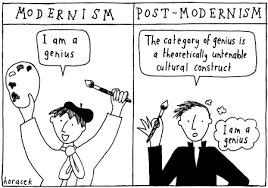

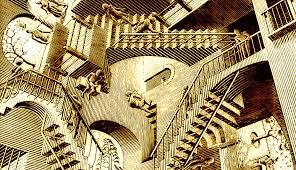

So here we can see what is postmodernism. Now its time to know about what is Popular Culture.
What is Popular Culture.?
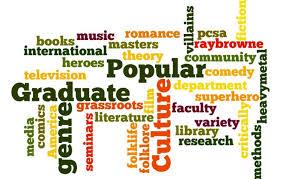
Popular Culture is the entirely idea of perspectives attitudes means images and other phenomena. There was a time before the 1960s when popular culture was not studied by academics when it was well just popular culture.
American studies at first and then later in many discipline, including semiotics, literary criticism history, women's study, comicbooks, television, film, music etc.
4 Analysis of Popular culture :
1) Production Analysis :
It aska some questions like, Who owns the media.? Who creat texts and Why.?
2) Textual Analysis :
It examine how specific works of this culture create meaning.
3) Audience Analysis :
It asks how different groups of popular culture makes similar or different sense of the same text.
4) Hitorical Analysis :
It investigates how these other three dimensions change over time.
High Art Popular culture(lowclass)
Fine art Advertising
Opera Pop music
Ballet Genre films
Classical music Television
Art Cinema Pornography
Sculpture Music Videos
Example of Popular culture art :

Name : Ami Trivdi
Roll no : 03
Class : M.A
Sem : 2
Enrollment no : 2069108420170029
Topic : What is Cultural Studies.? Postmodernism and Popular Culture
Year : 2016-2018
Email id : amitrivedi4288@gmail.com
Submitted to : Smt.S.B.Gardi Dept.of
English M.K.B.University
What is Cultural Studies.?
Cultural studies an innovative interdiscipline field of research and teaching that investigates the ways in which “culture” creates and transforms individual experiences, everyday life, social relations and power. Reseach and teaching in field explores the relations between culture understood as human expressive and symbolic activites and cultures understood as distinctive ways of life.
Cultural life is not only concerned with symbolic communication, it is also the domain in which we set collective tasks for ourselves and being to grapple with them as changing communities. Cultural studies devoted to understanding the processess through which societies and the diverse groups within them come t terms with history, community life, and the challenges of the future.
Cultural Studies: Like a Kid in an Analytical Candy Store
Think of cultural studies as the equivalent to Willy Wonka's Chocolate Factory: it may not involve quite as many people drowing in chocolate or turning into giant blueberries, but it's a theoretical theme park where you open the door and you are spoiled sweet for choice. A couple of things that are delicious about cultural studies are that it doesn't have just one theoretical approach , like some more traditional forms of literary theory, it doesn't confine itself to ane narrow corner of literature or culture. Sure , individual projects may target particular areas, but that's the point- cultural studies let's you choose what works. It's like the golden ticket of the theory world!
Cultural theorist study all sorts of texts and, unlike traditional literary studies, are as comfortable with contemporary culture and pop culture as with classics by Mlton, Dickens, and all their dead white guy friends.
Formation of Cultural Studies :
Cultural studieas is conceened with describing the ways cultural forms and practies are produced within, interested into, and operate in and effect the eceryday life of human beings and social formations, so as to reproduce, struggle against, and perhaps transform the existing structures of power. Cultural studies explores the historical possibilities of transforming people's lives by trying to understand the relationships of power within which individual realities are constructed.
Cultural Studies, Theor, and Power
The measure of a theory's truth is its ability to enable a better understanding of a particular context and to open up new-or at least imagined-possibilities for changing that context. In this sense, cultural studies desacralize theory in order to take it up as a contingent strategic resource. Thus cultural studies cannot be identifid with any single theoretical paradigm or tradition; it continues to wrestle with various modern and postmodern philosophies. The project of cultural studies, then, is a way of politizing theory and the theorizing politics. Cultural studies is always interested in how power infilteates, contaminates, limits and empowers the possibilities that people possess to live their lives in dignified and secure ways. Cultural studies also approaches power and politics as complex, contingent, and contextual phenomena and refuses to reduce power to a single dimension or axis.
The question of what cultural studies will look like only answerable within the particular context that calls cultural studies into existence. Cultural studies is not alone in privileding the questions of power or in its commitment to relationality and contextuality or in reognizing the importance of culture.
Diversity in Cultural Studies :
The diversity of cultural studies is as importance as its unity; yet there is no obvious single best way to organize or describe that diversity. One could display the range of objects and discourses that cultural studies has explored- including art, popular culture, media culture, news, political discourses, economies, development practies, everyday practies, organizations, cultural nstitutions. One could display the different political agendas- feminist, marxist, anti-homophobic, anti-postcolonial. One could discribe the implications of disciplinary diversity- literary studies, anthropology, sociology, communication, history, education, and geography.
The first model found in the work of Raymond Williams, reads texts as ideologies in context. That is, it uses texts to try to locate and define the common structure that unites the disparate elements of social formation into a unified social totality.
The second model, found in the work of communication scholar James Carey, looks at particular cultural practices as rituals that reenact that unity-shared meanings, structures, and identities-of a community.
The third model locates cultural texts and practices within a dialectic od domination and resistance and was closely associated wit the CCCS in the 1970s, especially in the early work of David Morley, Dick Hebdige, and Angela McRobbie.
The fourth model explores cultural and identities as coplex sets of relations. It involves the production of differences within a population, the effort to naturalize such identities as biological, the distribution of people into those cateories, and the assignment of particular meanings to each identity.
The fifth model is concerned wit the relationship betwee cultural and the state. Influenced in part by Gramsci, such work was best illustrated by the important work of Stuart Hall and John Clarke on hegemony as an alternative to notions of civil politics as ideological consensus.
The sixth model of “ governmentality “ emphasizes the variety of ways in which culture is used by state and other institutions to produce particular kinds of subjects and to regulate their conduct.
What is Postmodernism.?
Postmodernism is a late 20th century movement that is a reaction to the worldwide view of the 16th mid 0th century. It is a movement away from more especially it is a trend in contemporary culture characterized by the problem of objective truth and natural.
Postmodernism in literature :
Postmodernism authors tends to reject outright meaning in their novels, stories or poem and instead highlight and celebrate the possibility of multiple meanings or a complete lack of meaning with a single literary work.
It's also rejecs the boundaries between high and low forms of art and literature as well as the distintion between difference genres and form of writing.
Modernist literature using new techniques draw from psychology experimented with point of view, time, space and stream of consciousness writing.
Major figures of high modernism who radically redefine poetry and fiction included Virginia Woolf, James Joyce, Ezra Pound, T.S.Eliot. In postmodernism we find three main areas of capitalism :
1) Market Capitalism
2) Monopology Capitalism
3) Consumer Capitalism
Postmodernism is also said to reflect modern society's feelings of alienation, insecurity and uncertanities concerning identity, history, progress and truth, and break-up of those tradition like religion, the family or, perhaps to lesser extent, class, which helped identity snd shape who we are and our placein the world.
Characteristics of Post-modernism :
1) Irony
2) Playfulness
3) Black Humor
4) Pastiche
5) Inter-textuality
6) A sense of Paranoia
7) Faction and Fabulation
8) Magic Realism
Some examples of Post-modernism Art :
So here we can see what is postmodernism. Now its time to know about what is Popular Culture.
What is Popular Culture.?
Popular Culture is the entirely idea of perspectives attitudes means images and other phenomena. There was a time before the 1960s when popular culture was not studied by academics when it was well just popular culture.
American studies at first and then later in many discipline, including semiotics, literary criticism history, women's study, comicbooks, television, film, music etc.
4 Analysis of Popular culture :
1) Production Analysis :
It aska some questions like, Who owns the media.? Who creat texts and Why.?
2) Textual Analysis :
It examine how specific works of this culture create meaning.
3) Audience Analysis :
It asks how different groups of popular culture makes similar or different sense of the same text.
4) Hitorical Analysis :
It investigates how these other three dimensions change over time.
High Art Popular culture(lowclass)
Fine art Advertising
Opera Pop music
Ballet Genre films
Classical music Television
Art Cinema Pornography
Sculpture Music Videos
Example of Popular culture art :

No comments:
Post a Comment