Tuesday, 28 March 2017

Friday, 24 March 2017
Paper no 6 Victorian Literature
Click here to evaluate my assignment.
Name : Ami Trivedi
Roll no : 03
Class : M.A
Sem: 2
Enrolment no : 2069108420170029
Topic : Corruption of Society and Social justice
Year : 2016-2018
Email id : amitrivedi4288@gmail.com
Submitted to : SMT.S.B.Gardi
Dep. of English M.K.B.University
Child Labor in Global and Historical Perspective:
Child labor is a problem of immense social and economic proportion throughout the developing world. While there are encouraging trends in a number of nations-Brazil, Mexico, Turkey and to name a fw-child labor rates remain persistently high in much of the world. Millions of children are stuck in absolutetly intolerable situations, an many millions more are forced by necessity or circumstnce to work too much, at too young an age, robbed of both their childhoods and their futures.
But this is nothing nwe. Historically, in the now developed nations of the world, millions of children once worked in mines,mills, factories, farms, and city strreets, often in situations strikingly similar to those observed in the developing world today. Developed nations that took several generations to come to grips with their own child labor problems are now impatiently pressing the developing world for immediate and rapid progress.
But there is one important new feature of today's global child labor situation-a genuine global movement is under way to do away with it. With its roots in the histories of the developed nations, the movement began to coalesce in the late 1970s and early 1980s.
Charles Dickence and his novels based on social issues :
Dickens was not only the first great urban novelist in England, but also one of the most important social commentators who used fiction effectively to criticize conomic, social, and moral abuses in the Victorian era. Dickens showed compassion and empathy towards the vulnerable and disadvantaged segments of English society, and contributed to several important social reforms. Dickens deep social and commitmrnt and awareness of socia, ills are derived from his traumatic chilhood, experiences when his father was imprisoned in the Marshalsea Debtors Prison under the Insolvent Debtors Act of 1813, and he at the age of twelve worked in a shoe-blacking factory.
In his adult life Dickens developed a strong social conscience, an ability to empathise with the victims of social and conomic injustices. Dickens believed in the ethical and political of literature, and the novel in particular, and he treated his fiction as a springboard for debates about moral and social reforms. His deeply-felt social commentaries helped raise the collective awareness of the reading public. Dickens contributed significantly to the emergence of public opinion which was gaining an increasing influence on the decisions of the authorites.
Oliver Twist, which represents a radical change in Dickens's themes, is his first novel to carry a social comentary similar to that contained in the subsequent condition of England novels.
According to Louis Cazamian, the success of Twist confirmed Dickens determination to write on social topics, and the inception of Chartism means that the burning social issue of the day was the problem of the working class. Dickens exploers many social themes in Oliver Twist, but three are predominent : the abuses of the new Poor Law system, the evils of the criminal world in London and the victimisation of children. The critique of the Poor Law of 1834 and the administration of the workhouse is preseted in the opening chapters of Oliver Twist.
In contrast to Pickwick, in Oliver Twist Dickens shows England as a country of what Disraell called “the two nations” : the rich and privileged and the poor living in abject and inhumane conditions of deprivation, misery and humiliation.
In Oliver Twist Dickens presents a portraits of the macabre childhood of a considerable number of Victorian orphans are underfed, and for a meal they are given a single scoopof gruel. Oliver Twist can be read as a textbook of Victorian child abuse and a social document about early Victorian slum life. When Oliver Goes wit Sowerberry to fetch the body of a woman dead of starvation,he can see an appalling view of derelict slum houses.
Here I mention some question about Society and class in context of Oliver Twist.
1) In the world of Oliver Twist, is the middle class always morally superior to the working class?
2) Is the reader condemned along with the rest of “society” in Oliver Twist?
Crime was a huge problem in London in the 1830s, when Dickens was writing. Novels and plays about crime were hugely popular. Some novelists wrote about crime because they had a particular point to make about the source of criminal behavior, or possible solution to yhe crime wave.
Questions about Criminality :
1) Members of Fagin's gang aren't the only thieves in this novel. Who eles steals? From whom?
2) Do any thieves go unpunished? Why do you think that is?
3) In the world of Oliver Twist, what causes an individual to turn to crime?
Name : Ami Trivedi
Roll no : 03
Class : M.A
Sem: 2
Enrolment no : 2069108420170029
Topic : Corruption of Society and Social justice
Year : 2016-2018
Email id : amitrivedi4288@gmail.com
Submitted to : SMT.S.B.Gardi
Dep. of English M.K.B.University
Child Labor in Global and Historical Perspective:
Child labor is a problem of immense social and economic proportion throughout the developing world. While there are encouraging trends in a number of nations-Brazil, Mexico, Turkey and to name a fw-child labor rates remain persistently high in much of the world. Millions of children are stuck in absolutetly intolerable situations, an many millions more are forced by necessity or circumstnce to work too much, at too young an age, robbed of both their childhoods and their futures.
But this is nothing nwe. Historically, in the now developed nations of the world, millions of children once worked in mines,mills, factories, farms, and city strreets, often in situations strikingly similar to those observed in the developing world today. Developed nations that took several generations to come to grips with their own child labor problems are now impatiently pressing the developing world for immediate and rapid progress.
But there is one important new feature of today's global child labor situation-a genuine global movement is under way to do away with it. With its roots in the histories of the developed nations, the movement began to coalesce in the late 1970s and early 1980s.
Charles Dickence and his novels based on social issues :
Dickens was not only the first great urban novelist in England, but also one of the most important social commentators who used fiction effectively to criticize conomic, social, and moral abuses in the Victorian era. Dickens showed compassion and empathy towards the vulnerable and disadvantaged segments of English society, and contributed to several important social reforms. Dickens deep social and commitmrnt and awareness of socia, ills are derived from his traumatic chilhood, experiences when his father was imprisoned in the Marshalsea Debtors Prison under the Insolvent Debtors Act of 1813, and he at the age of twelve worked in a shoe-blacking factory.
In his adult life Dickens developed a strong social conscience, an ability to empathise with the victims of social and conomic injustices. Dickens believed in the ethical and political of literature, and the novel in particular, and he treated his fiction as a springboard for debates about moral and social reforms. His deeply-felt social commentaries helped raise the collective awareness of the reading public. Dickens contributed significantly to the emergence of public opinion which was gaining an increasing influence on the decisions of the authorites.
Oliver Twist, which represents a radical change in Dickens's themes, is his first novel to carry a social comentary similar to that contained in the subsequent condition of England novels.
According to Louis Cazamian, the success of Twist confirmed Dickens determination to write on social topics, and the inception of Chartism means that the burning social issue of the day was the problem of the working class. Dickens exploers many social themes in Oliver Twist, but three are predominent : the abuses of the new Poor Law system, the evils of the criminal world in London and the victimisation of children. The critique of the Poor Law of 1834 and the administration of the workhouse is preseted in the opening chapters of Oliver Twist.
In contrast to Pickwick, in Oliver Twist Dickens shows England as a country of what Disraell called “the two nations” : the rich and privileged and the poor living in abject and inhumane conditions of deprivation, misery and humiliation.
In Oliver Twist Dickens presents a portraits of the macabre childhood of a considerable number of Victorian orphans are underfed, and for a meal they are given a single scoopof gruel. Oliver Twist can be read as a textbook of Victorian child abuse and a social document about early Victorian slum life. When Oliver Goes wit Sowerberry to fetch the body of a woman dead of starvation,he can see an appalling view of derelict slum houses.
Here I mention some question about Society and class in context of Oliver Twist.
1) In the world of Oliver Twist, is the middle class always morally superior to the working class?
2) Is the reader condemned along with the rest of “society” in Oliver Twist?
Crime was a huge problem in London in the 1830s, when Dickens was writing. Novels and plays about crime were hugely popular. Some novelists wrote about crime because they had a particular point to make about the source of criminal behavior, or possible solution to yhe crime wave.
Questions about Criminality :
1) Members of Fagin's gang aren't the only thieves in this novel. Who eles steals? From whom?
2) Do any thieves go unpunished? Why do you think that is?
3) In the world of Oliver Twist, what causes an individual to turn to crime?
Wednesday, 22 March 2017
Paper no 8 Cultural Studies
Click here to evaluate my assignment.
Name : Ami Trivdi
Roll no : 03
Class : M.A
Sem : 2
Enrollment no : 2069108420170029
Topic : What is Cultural Studies.? Postmodernism and Popular Culture
Year : 2016-2018
Email id : amitrivedi4288@gmail.com
Submitted to : Smt.S.B.Gardi Dept.of
English M.K.B.University
What is Cultural Studies.?
Cultural studies an innovative interdiscipline field of research and teaching that investigates the ways in which “culture” creates and transforms individual experiences, everyday life, social relations and power. Reseach and teaching in field explores the relations between culture understood as human expressive and symbolic activites and cultures understood as distinctive ways of life.
Cultural life is not only concerned with symbolic communication, it is also the domain in which we set collective tasks for ourselves and being to grapple with them as changing communities. Cultural studies devoted to understanding the processess through which societies and the diverse groups within them come t terms with history, community life, and the challenges of the future.
Cultural Studies: Like a Kid in an Analytical Candy Store
Think of cultural studies as the equivalent to Willy Wonka's Chocolate Factory: it may not involve quite as many people drowing in chocolate or turning into giant blueberries, but it's a theoretical theme park where you open the door and you are spoiled sweet for choice. A couple of things that are delicious about cultural studies are that it doesn't have just one theoretical approach , like some more traditional forms of literary theory, it doesn't confine itself to ane narrow corner of literature or culture. Sure , individual projects may target particular areas, but that's the point- cultural studies let's you choose what works. It's like the golden ticket of the theory world!
Cultural theorist study all sorts of texts and, unlike traditional literary studies, are as comfortable with contemporary culture and pop culture as with classics by Mlton, Dickens, and all their dead white guy friends.
Formation of Cultural Studies :
Cultural studieas is conceened with describing the ways cultural forms and practies are produced within, interested into, and operate in and effect the eceryday life of human beings and social formations, so as to reproduce, struggle against, and perhaps transform the existing structures of power. Cultural studies explores the historical possibilities of transforming people's lives by trying to understand the relationships of power within which individual realities are constructed.
Cultural Studies, Theor, and Power
The measure of a theory's truth is its ability to enable a better understanding of a particular context and to open up new-or at least imagined-possibilities for changing that context. In this sense, cultural studies desacralize theory in order to take it up as a contingent strategic resource. Thus cultural studies cannot be identifid with any single theoretical paradigm or tradition; it continues to wrestle with various modern and postmodern philosophies. The project of cultural studies, then, is a way of politizing theory and the theorizing politics. Cultural studies is always interested in how power infilteates, contaminates, limits and empowers the possibilities that people possess to live their lives in dignified and secure ways. Cultural studies also approaches power and politics as complex, contingent, and contextual phenomena and refuses to reduce power to a single dimension or axis.
The question of what cultural studies will look like only answerable within the particular context that calls cultural studies into existence. Cultural studies is not alone in privileding the questions of power or in its commitment to relationality and contextuality or in reognizing the importance of culture.
Diversity in Cultural Studies :
The diversity of cultural studies is as importance as its unity; yet there is no obvious single best way to organize or describe that diversity. One could display the range of objects and discourses that cultural studies has explored- including art, popular culture, media culture, news, political discourses, economies, development practies, everyday practies, organizations, cultural nstitutions. One could display the different political agendas- feminist, marxist, anti-homophobic, anti-postcolonial. One could discribe the implications of disciplinary diversity- literary studies, anthropology, sociology, communication, history, education, and geography.
The first model found in the work of Raymond Williams, reads texts as ideologies in context. That is, it uses texts to try to locate and define the common structure that unites the disparate elements of social formation into a unified social totality.
The second model, found in the work of communication scholar James Carey, looks at particular cultural practices as rituals that reenact that unity-shared meanings, structures, and identities-of a community.
The third model locates cultural texts and practices within a dialectic od domination and resistance and was closely associated wit the CCCS in the 1970s, especially in the early work of David Morley, Dick Hebdige, and Angela McRobbie.
The fourth model explores cultural and identities as coplex sets of relations. It involves the production of differences within a population, the effort to naturalize such identities as biological, the distribution of people into those cateories, and the assignment of particular meanings to each identity.
The fifth model is concerned wit the relationship betwee cultural and the state. Influenced in part by Gramsci, such work was best illustrated by the important work of Stuart Hall and John Clarke on hegemony as an alternative to notions of civil politics as ideological consensus.
The sixth model of “ governmentality “ emphasizes the variety of ways in which culture is used by state and other institutions to produce particular kinds of subjects and to regulate their conduct.
What is Postmodernism.?
Postmodernism is a late 20th century movement that is a reaction to the worldwide view of the 16th mid 0th century. It is a movement away from more especially it is a trend in contemporary culture characterized by the problem of objective truth and natural.
Postmodernism in literature :
Postmodernism authors tends to reject outright meaning in their novels, stories or poem and instead highlight and celebrate the possibility of multiple meanings or a complete lack of meaning with a single literary work.
It's also rejecs the boundaries between high and low forms of art and literature as well as the distintion between difference genres and form of writing.
Modernist literature using new techniques draw from psychology experimented with point of view, time, space and stream of consciousness writing.
Major figures of high modernism who radically redefine poetry and fiction included Virginia Woolf, James Joyce, Ezra Pound, T.S.Eliot. In postmodernism we find three main areas of capitalism :
1) Market Capitalism
2) Monopology Capitalism
3) Consumer Capitalism
Postmodernism is also said to reflect modern society's feelings of alienation, insecurity and uncertanities concerning identity, history, progress and truth, and break-up of those tradition like religion, the family or, perhaps to lesser extent, class, which helped identity snd shape who we are and our placein the world.
Characteristics of Post-modernism :
1) Irony
2) Playfulness
3) Black Humor
4) Pastiche
5) Inter-textuality
6) A sense of Paranoia
7) Faction and Fabulation
8) Magic Realism
Some examples of Post-modernism Art :
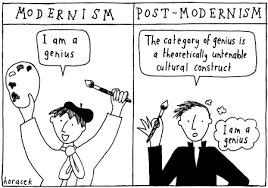

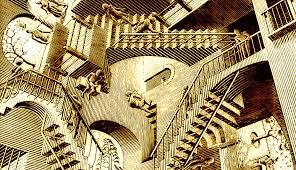

So here we can see what is postmodernism. Now its time to know about what is Popular Culture.
What is Popular Culture.?
Popular Culture is the entirely idea of perspectives attitudes means images and other phenomena. There was a time before the 1960s when popular culture was not studied by academics when it was well just popular culture.
American studies at first and then later in many discipline, including semiotics, literary criticism history, women's study, comicbooks, television, film, music etc.
4 Analysis of Popular culture :
1) Production Analysis :
It aska some questions like, Who owns the media.? Who creat texts and Why.?
2) Textual Analysis :
It examine how specific works of this culture create meaning.
3) Audience Analysis :
It asks how different groups of popular culture makes similar or different sense of the same text.
4) Hitorical Analysis :
It investigates how these other three dimensions change over time.
High Art Popular culture(lowclass)
Fine art Advertising
Opera Pop music
Ballet Genre films
Classical music Television
Art Cinema Pornography
Sculpture Music Videos
Example of Popular culture art :

Name : Ami Trivdi
Roll no : 03
Class : M.A
Sem : 2
Enrollment no : 2069108420170029
Topic : What is Cultural Studies.? Postmodernism and Popular Culture
Year : 2016-2018
Email id : amitrivedi4288@gmail.com
Submitted to : Smt.S.B.Gardi Dept.of
English M.K.B.University
What is Cultural Studies.?
Cultural studies an innovative interdiscipline field of research and teaching that investigates the ways in which “culture” creates and transforms individual experiences, everyday life, social relations and power. Reseach and teaching in field explores the relations between culture understood as human expressive and symbolic activites and cultures understood as distinctive ways of life.
Cultural life is not only concerned with symbolic communication, it is also the domain in which we set collective tasks for ourselves and being to grapple with them as changing communities. Cultural studies devoted to understanding the processess through which societies and the diverse groups within them come t terms with history, community life, and the challenges of the future.
Cultural Studies: Like a Kid in an Analytical Candy Store
Think of cultural studies as the equivalent to Willy Wonka's Chocolate Factory: it may not involve quite as many people drowing in chocolate or turning into giant blueberries, but it's a theoretical theme park where you open the door and you are spoiled sweet for choice. A couple of things that are delicious about cultural studies are that it doesn't have just one theoretical approach , like some more traditional forms of literary theory, it doesn't confine itself to ane narrow corner of literature or culture. Sure , individual projects may target particular areas, but that's the point- cultural studies let's you choose what works. It's like the golden ticket of the theory world!
Cultural theorist study all sorts of texts and, unlike traditional literary studies, are as comfortable with contemporary culture and pop culture as with classics by Mlton, Dickens, and all their dead white guy friends.
Formation of Cultural Studies :
Cultural studieas is conceened with describing the ways cultural forms and practies are produced within, interested into, and operate in and effect the eceryday life of human beings and social formations, so as to reproduce, struggle against, and perhaps transform the existing structures of power. Cultural studies explores the historical possibilities of transforming people's lives by trying to understand the relationships of power within which individual realities are constructed.
Cultural Studies, Theor, and Power
The measure of a theory's truth is its ability to enable a better understanding of a particular context and to open up new-or at least imagined-possibilities for changing that context. In this sense, cultural studies desacralize theory in order to take it up as a contingent strategic resource. Thus cultural studies cannot be identifid with any single theoretical paradigm or tradition; it continues to wrestle with various modern and postmodern philosophies. The project of cultural studies, then, is a way of politizing theory and the theorizing politics. Cultural studies is always interested in how power infilteates, contaminates, limits and empowers the possibilities that people possess to live their lives in dignified and secure ways. Cultural studies also approaches power and politics as complex, contingent, and contextual phenomena and refuses to reduce power to a single dimension or axis.
The question of what cultural studies will look like only answerable within the particular context that calls cultural studies into existence. Cultural studies is not alone in privileding the questions of power or in its commitment to relationality and contextuality or in reognizing the importance of culture.
Diversity in Cultural Studies :
The diversity of cultural studies is as importance as its unity; yet there is no obvious single best way to organize or describe that diversity. One could display the range of objects and discourses that cultural studies has explored- including art, popular culture, media culture, news, political discourses, economies, development practies, everyday practies, organizations, cultural nstitutions. One could display the different political agendas- feminist, marxist, anti-homophobic, anti-postcolonial. One could discribe the implications of disciplinary diversity- literary studies, anthropology, sociology, communication, history, education, and geography.
The first model found in the work of Raymond Williams, reads texts as ideologies in context. That is, it uses texts to try to locate and define the common structure that unites the disparate elements of social formation into a unified social totality.
The second model, found in the work of communication scholar James Carey, looks at particular cultural practices as rituals that reenact that unity-shared meanings, structures, and identities-of a community.
The third model locates cultural texts and practices within a dialectic od domination and resistance and was closely associated wit the CCCS in the 1970s, especially in the early work of David Morley, Dick Hebdige, and Angela McRobbie.
The fourth model explores cultural and identities as coplex sets of relations. It involves the production of differences within a population, the effort to naturalize such identities as biological, the distribution of people into those cateories, and the assignment of particular meanings to each identity.
The fifth model is concerned wit the relationship betwee cultural and the state. Influenced in part by Gramsci, such work was best illustrated by the important work of Stuart Hall and John Clarke on hegemony as an alternative to notions of civil politics as ideological consensus.
The sixth model of “ governmentality “ emphasizes the variety of ways in which culture is used by state and other institutions to produce particular kinds of subjects and to regulate their conduct.
What is Postmodernism.?
Postmodernism is a late 20th century movement that is a reaction to the worldwide view of the 16th mid 0th century. It is a movement away from more especially it is a trend in contemporary culture characterized by the problem of objective truth and natural.
Postmodernism in literature :
Postmodernism authors tends to reject outright meaning in their novels, stories or poem and instead highlight and celebrate the possibility of multiple meanings or a complete lack of meaning with a single literary work.
It's also rejecs the boundaries between high and low forms of art and literature as well as the distintion between difference genres and form of writing.
Modernist literature using new techniques draw from psychology experimented with point of view, time, space and stream of consciousness writing.
Major figures of high modernism who radically redefine poetry and fiction included Virginia Woolf, James Joyce, Ezra Pound, T.S.Eliot. In postmodernism we find three main areas of capitalism :
1) Market Capitalism
2) Monopology Capitalism
3) Consumer Capitalism
Postmodernism is also said to reflect modern society's feelings of alienation, insecurity and uncertanities concerning identity, history, progress and truth, and break-up of those tradition like religion, the family or, perhaps to lesser extent, class, which helped identity snd shape who we are and our placein the world.
Characteristics of Post-modernism :
1) Irony
2) Playfulness
3) Black Humor
4) Pastiche
5) Inter-textuality
6) A sense of Paranoia
7) Faction and Fabulation
8) Magic Realism
Some examples of Post-modernism Art :
So here we can see what is postmodernism. Now its time to know about what is Popular Culture.
What is Popular Culture.?
Popular Culture is the entirely idea of perspectives attitudes means images and other phenomena. There was a time before the 1960s when popular culture was not studied by academics when it was well just popular culture.
American studies at first and then later in many discipline, including semiotics, literary criticism history, women's study, comicbooks, television, film, music etc.
4 Analysis of Popular culture :
1) Production Analysis :
It aska some questions like, Who owns the media.? Who creat texts and Why.?
2) Textual Analysis :
It examine how specific works of this culture create meaning.
3) Audience Analysis :
It asks how different groups of popular culture makes similar or different sense of the same text.
4) Hitorical Analysis :
It investigates how these other three dimensions change over time.
High Art Popular culture(lowclass)
Fine art Advertising
Opera Pop music
Ballet Genre films
Classical music Television
Art Cinema Pornography
Sculpture Music Videos
Example of Popular culture art :
Monday, 20 March 2017
Paper no 5 Romantic Literature
Roll no : 03
Class : M.A
Sem: 2
Enrolment no :
2069108420170029
Topic : Definition of
romantic poetry, Wordsworth as a romantic poet and his works.
Year : 2016-2018
Email id :
amitrivedi4288@gmail.com
Submitted to :
SMT.S.B.Gardi
Dep.
of English M.K.B.University
Background :
The
Romantic Revival or Romanticism is a name given to a movement in
European literature which spread in the last quarter of the 18th
century. It was a revolt against classicism. It was a revolt that
produced the romance of Scott and the poems of Wordsworth, Coleridge,
Keats, Shelley and Byron.
Definition of
'Romanticism' :
“Romanticism is
the opposite, not of classicism but of realism.”
-Victor Hugo
“Romanticism means the
renaissance of wonder.
-Walter
-Walter
What is Romantic poetry.?
:
Romantic poetry
is the poetry of the Romantic era, an artistic, literary, musical and
intellectual movement that originated in Europe toward the end of the
18th century.
William
Wordsworth was actively engaged in trying to create a new kind of
poetry. Wordsworth himself in the preface of his and Samuel Taylor
Coleridge's Lyrical Ballads defined that good poetry as,
“ Spontaneous
overflow of powerful feelings.”
Characteristics of English Romantic poetry :
- Romanticism:
Romantic poetry contrast with neoclassical poetry, which is poetry of intellect and reason, while romantic poetry is the production of emotions, sentiments and the heart. According to William J Long“ The Romantic Movement was marked, and is always marked, by a strong reaction and protest against the bondage of rule and custom which in science and theology as well as literature, generally tends to fetter the free human spirit.”
- Imagination :
Belief in the
importance of romantic poets such as John Keats, Samuel Coleridge and
P.B.Shelley. Keats said,
“ I am certain of
nothing but of the holiness of the Heart's in both Wordsworth and
William Blake. The imagination is related to morality and they
believe that literature, especially poetry, could improve the world.
The secret of great art, Blake claimed, is the capacity to imagine.”
- Nature Poetry :
Love for
nature is another interesting feature of romantic poetry, a
wellspring of inspiration, satisfaction and happiness. This poetry
involves a relationship with external nature and places, and a belief
in Panthism. However, the romantic poets differed in their views
about nature. Wordsworth recognized his epic poem The Prelude. In his
poem “ The Tables Turn” he writes :
“ One impules from the
vernal wood
Can teach you more of
man,
Of moral evil and
good,
Than all sages can.”
Shelley was another nature
poet, who believed that nature is a living thing and there is a union
between nature and man. Wordsworth approaches nature
philosophically, while shelley emphasiese the intellect. John Keats
is another a lover of nature, but Coleridge differs from other
romantic poets of his age, in that he has realistic perspective on
nature. He believes that nature is not the source of joy and
pleasure, but rather that people's reactions to it depends on their
mood and disposition. Coleridge believed that joy does not come from
external nature.
4) Medievalism :
It is another
important characteristic of romantic poetry, especially in the works
of John Keats and Coleridge. They were attracted to exotic, remote
and obscure places, and so they were more attracted to Middle Ages
than to their own age.
Wordsworth as a romantic
poet and his works :
William Wordsworth's
poetry exhibits Romantic Characteristics and for his treatment
towards romantic elements, he stands supreme and be termed a Romantic
poet on a number of reasons. The romantic movement of early
nineteenth century was a revolt against the classical tradition of
the eighteenth century; but it was also marked by certain positive
trends. Wordsworth was of course, a pioneer of the Romantic Movement
of the nineteenth century. With the publication of Lyrical Ballads,
the trends become more or less established. However, the reason for
why Wordsworth can be called a Romantic poet given below.
Imagination : Where the
eighteenth century poets used to put emphasis much or 'wit', the
romantic poets used to put emphasis on 'imagination.' Wordsworth uses
imagination so that the common things could be made to look strange
and beautiful through the play of imagination. In his famous
'Intimation Ode', it seems to his as to the child “ the earth, and
every common sight” seemed “apparelled in celestial light”.
Nature : Wordsworth is
especially regarded as a poet nature. In the most of the poems of
Wordworth nature is constructed as both a healing entity and a
teacher or moral gurdian. Nature is considerd in his poems as a
living personality. He is true worshiper of nature: nature's devotee
or high priest.
Wordsworth says
nature “never did betray the heart that loved her.”
Subjectivity :
Subjectivity is the key note of Romantic poetry. He expresses his
personal thoughts, feelings through his poems. Nature becomes all in
all to the poet. The sounding cataract haunted him like a passion.
Nature was his beloved. He loved only the sensuous beauty of nature.
He has also a philosophy of nature.
Wordsworth's Theory of
Poetry :
The creative
process is explained by Wordsworth in following words :-
“ Poetry is spontaneous
overflow of powerful feelings; it takes origin from emotion
recollected in tranquility; emotion is contemplated till, by a
species of reaction, the tranquility gradually disappears, and an
emotion, kindred to that which was before the subject of
contemplation, is gradually produced, and does itself actually exist
in the mind.”
His famous works :
- ' Daffodils '
- ' The Prelude'
- ' An Evening Walk '
- ' Descriptive Sketches '
- ' Lyrical Ballad '
- ' The Excursion '
Wednesday, 15 March 2017
Paper no 7 I.A.Richards Figurative Language
Roll
no : 02
Class
: M.A
Sem
: 2
Topic
: I.A.Richard : Figurative
Language
Language
by some examples of movie
songs and
poems
Year
: 2016-2018
Email
id : amitrivedi4288@gmail.com
Submitted
to : SMT.S.B.Gardi
Department of
English
M.K.B.University
M.K.B.University
What
is Figurative Language..? :
Figurative
Language is general is
almost
almost
always used in linguistic art because
it
allows for more versatile ways of
description. Metaphors and
analogies
in
in
particular allow for more detail and
explanation by
comparing something
the
the
audience doesn't know with something the
audience does know.
Not
only can it be used to better
describe
describe
things, but there is also a
puzzle - like
component to figurative language;
that's
that's
what makes
people so surprised by
fancy
fancy
language.
According
to I.A.Richard, words carry
four
four
kinda of meaning or to be more
precise,
precise,
the
total meaning of a word depends upon
four
four
factors.
1) Sense : Sense is what is said, or the
'items' referred to by a
writer.
2) Feelings : It refers to emotions,
emotional attitudes, will, desire,
pleasure,
pleasure,
displeasure and the rest.
3) Tone : Tone is the writer's attitude
to
his
readers or audience.
4) Intention : Writer's aim,which may
be
conscious or unconcious. It
refers to
the
the
effect that he tries to produce. This
purpose modifies
the expression.
According
to I.A.Richard language can
be
be
used in tow ways...
1)
The scientific use : In this we are
usually
matter of facts. All the activities
covered
covered
by
this use require undistorted references
and
absence of fiction.
2)
Emotive use : We may use a
statement,
statement,
true or false, in a scientific
use of
language,
but it may also be used to creat
emotions
emotions
and
attitude. This is the emotive use of
language.
Let
us know more about use of
figurative
figurative
language with some examples of
movie
songs.
Example 1 : Bhagwan he kaha re
tu...from movie PK
Hai
Suna Ye Poori Dharti Tu Chalata Hai
Meri Bhi Sun Le Araj Mujhe Ghar Bulata Hai
Bhagwaan Hai Kahan Re Tu
Hey Khuda Hai Kahan Re Tu
Meri Bhi Sun Le Araj Mujhe Ghar Bulata Hai
Bhagwaan Hai Kahan Re Tu
Hey Khuda Hai Kahan Re Tu
Hai Suna Tu Bhatke
Mann Ko Raah Dikhata Hai
Main Bhi Khoya Hun Mujhe Ghar Bulata Hai
Bhagwaan Hai Kahan Re Tu
Hey Khuda Hai Kahan Re Tu
Main Bhi Khoya Hun Mujhe Ghar Bulata Hai
Bhagwaan Hai Kahan Re Tu
Hey Khuda Hai Kahan Re Tu
Aa…
Main Pooja Karun Ya Namajein Padhun
Ardaasein Karun Din Rain
Na Tu Mandir Mile, Na Tu Girje Mile
Tujhe Dhoondein Thake Mere Nain
Tujhe Dhoondein Thake Mere Nain
Tujhe Dhoondein Thake Mere Nain
Main Pooja Karun Ya Namajein Padhun
Ardaasein Karun Din Rain
Na Tu Mandir Mile, Na Tu Girje Mile
Tujhe Dhoondein Thake Mere Nain
Tujhe Dhoondein Thake Mere Nain
Tujhe Dhoondein Thake Mere Nain
Jo Bhi Rasmein Hain
Wo Saari Main Nibhata Hoon
In Karodon Ki Tarah Main Sar Jhukata Hoon
Bhagwaan Hai Kahan Re Tu
Aye Khuda Hai Kahan Re Tu
In Karodon Ki Tarah Main Sar Jhukata Hoon
Bhagwaan Hai Kahan Re Tu
Aye Khuda Hai Kahan Re Tu
Tere Naam Kayi, Tere
Chehre Kayi
Tujhe Paane Ki Raahein Kayi
Har Raah Chala Par Tu Na Mila
Tu Kya Chaahe Main Samjha Nahin
Tu Kya Chaahe Main Samjha Nahin
Tu Kya Chaahe Main Samjha Nahin
Tujhe Paane Ki Raahein Kayi
Har Raah Chala Par Tu Na Mila
Tu Kya Chaahe Main Samjha Nahin
Tu Kya Chaahe Main Samjha Nahin
Tu Kya Chaahe Main Samjha Nahin
Soche Bin Samjhe
Jatan Karta Hi Jaata Hun
Teri Zid Sar Aankhon Par Rakh Ke Nibhata Hun
Bhagwaan Hai Kahan Re Tu
Aye Khuda Hai Kahan Re Tu
Teri Zid Sar Aankhon Par Rakh Ke Nibhata Hun
Bhagwaan Hai Kahan Re Tu
Aye Khuda Hai Kahan Re Tu
Hai Suna Ye Poori
Dharti Tu Chalata Hai
Meri Bhi Sun Le Araj Mujhe Ghar Bulata Hai
Bhagwaan Hai Kahan Re Tu
Hey Khuda Hai Kahan Re Tu
Bhagwaan Hai Kahan Re Tu
Hey Khuda Hai Kahan Re Tu.
Meri Bhi Sun Le Araj Mujhe Ghar Bulata Hai
Bhagwaan Hai Kahan Re Tu
Hey Khuda Hai Kahan Re Tu
Bhagwaan Hai Kahan Re Tu
Hey Khuda Hai Kahan Re Tu.
A
song about a person who is looking
for
for
God, doing the best he can do
in life,
and
and
yet not getting what he wishes for, as
he
he
desperately
asks God where He is.
Here
Here
we
can say that we do not wait for God
that
he
that
he
came and does
something good for us.
We
We
have to help our own self and we have
to
to
do
our work without any expectations
from
from
God or from others also. Here
we find
some
interesting lines,
Tere Naam Kayi, Tere Chehre Kayi
Tujhe Paane Ki Raahein Kayi
Har Raah Chala Par Tu Na Mila
We
connect the dots that there are
different
type of religion and like
Hindu, Muslim,
Sikh so here protagonist try to say that
I
I
do
each and
every religious prayer but I
can
can
not found you anywhere. So here we
can
can
say that there is no single or one path
to
to
do
struggle to get
something if we fail in
one
one
than we try another path to get that
thing.
thing.
In short here we can find that we do
not
not
stop trying to get
succes. We keep
trying
trying
and success is obviously come to us. If
we
we
stop trying than we get nothing.
Example
2 : Samjan ni kupal ne
vavo...title
track of Gujrati serial 'Chhuta
Cheda'
Cheda'
Samjan ni kupal ne vavo...
Samjan
ni kupal ne vavo...
Bharti
ne oot to aavya kare,
Tame
dariya ne etlu samjavo.
Mausam
to badlati rehvani,
Phoolon
ne kaantao dharvani,
Phoolon
ne zili lo hath ma,
To
foram felashe sangath ma.
Ret
nahi het ne vahavo,
vahalap
ne varta banavo,
Samjan
ni kupalne vavo....
This
title track of Gujarati serial is very
interesting to understand.
This song is
all
all
about understanding between husband
and
wife and how
they should maintain
their
their
relationship. There is very interesting
metaphors use for happiness and
sadness.
sadness.
For happiness “bharti”
and for sadness
“oot” metaphors are used. In evryone's
life
happy and sad moments must come but
at
at
that time we have to support
eachothere
eachothere
we do not fight with eachother. These
things are more
important for husband
and
wife because now a days wifes are not
inferior than husband. She maitain
both
both
house work and office work so
both of
them
have to undersatand eachother. Here
we
we
can find one more
interesting
metaphor
for
metaphor
for
time is “ret.” 'Ret nahi het ne vahao.'
Means
if they get chance from their busy
scheduel
scheduel
they have to enjoy
their quality time do
not
not
waste their time to fight with
eachother
eachother
and spend time on other activity. So
here
here
can see different metaphors
for
describe
describe
married life.
The
third and last example is very
interesting one. This song is talk
about
corrupt people who have powers and
they
they
use that power in wrong
way. And how
people should react against this
corrupt
corrupt
people.
Example
3 : Janta Rocks...from
movie
movie
Satyagrah
O Hilegi Kursii Dolegaa Shaasan
Dag Dagg Dag Dagg Janta Rocks
Ab Baat Karegii Janta Rocks
Jaag Uthii Hai Janta Rocks
Baat Karegi Jaag Uthii..
Ab Raaj Karegii Jantaa Hoye..
Aara Ra Ra Ra Ra Ra Ra Janta Rocks..(2)
Ab Raaj Karegi Janta
Janta Rocks..Janta
Rocks..(3)
In
this first stanza we interpret that
now
now
common man wakeup and they
protest
against corruption.And now the power
is in
is in
the Janta's hand.
But one question we
must
ask as common man that really power
is
in
is
in
our hand.? Or still we are 'Kathputli' of
this
this
corrupt politions.?
Chalo Ghotaale Ki Baat Karein..
Kuchh Dhann Kaale Ki Baat Karein..
Bhai Ghotaalaa Karnaa Khel Nahi..Aukaat Chaahiye
Ek Alag Hi Kalaa Chahiye..Baat Chaahiye
Aam Aadmi Kyaa
Samjhegaa
Bade Logon Kii Badi Baat
Hoo Unse Kaho Fursat Hai Bhaiyaa
Sab Chauka, Choolhaa Aur Daal-Bhaat
Hoo Unse Kaho Fursat Hai Bhaiyaa
Sab Chauka, Choolhaa Aur Daal-Bhaat
Bade Logon Kii Badi Baat
Hoo Unse Kaho Fursat Hai Bhaiyaa
Sab Chauka, Choolhaa Aur Daal-Bhaat
Hoo Unse Kaho Fursat Hai Bhaiyaa
Sab Chauka, Choolhaa Aur Daal-Bhaat
Aur Ye Mantri Ji Ne
Kalaayi Ke Prayog Se
Dhan Ko Mod Diya Hai
Boundary Line Ki Taraf Yahaan Koi Fielder Nahi
Aur Jantaa Ke Dekhte Hi Dekhte Swiss Bank Mein
Ek Aur Khaata Khulaa.
Per Hamre Ghotaale Se Tohra Ghotaala
Bada Kaise Re..Ji Haan,
Super Ghotaale Ki Chamkaar Zyada Safed
Dhan Ko Mod Diya Hai
Boundary Line Ki Taraf Yahaan Koi Fielder Nahi
Aur Jantaa Ke Dekhte Hi Dekhte Swiss Bank Mein
Ek Aur Khaata Khulaa.
Per Hamre Ghotaale Se Tohra Ghotaala
Bada Kaise Re..Ji Haan,
Super Ghotaale Ki Chamkaar Zyada Safed
Ghotalaa Chhap
Tumhein Salaam
Janta Kartii Tumhein Pranaam
Khamosh Rahii Hai Ab Tak Per
Ab Baat Karegii Jantaa..
Janta Kartii Tumhein Pranaam
Khamosh Rahii Hai Ab Tak Per
Ab Baat Karegii Jantaa..
Aara Ra Ra Ra Ra Ra
Ra Janta Rocks..(2)
Ab Raaj Karegi Janta
Ab Raaj Karegi Janta
Janta Rocks..Janta
Rocks..(4)
In
this second stanza the talk is all
about
about
black money and corruption
done by
politions. Here we can find some very
interesting lines that
'Bhai ghotala
karna
karna
khel nahi..Aukaat Chaahiye..Ek alag hi
kalaa
chahiye..' Here the lyricist make
satire on corrupt people that if
you
have
to
have
to
use your power in wrong way you have
that
art. This art
of doing 'Ghotala' is not a
cup
cup
of tea of common man. Because
common
common
has no time for all this things they are
busy
busy
in their routine life,
or we can say from
their ' Chulha, Choka aur Daal-bhaat',
means
common man are busy in their
routine life. So now it's enough. Now
common man also have voice and now they
protest against corruption
and against
this “
this “
Ghotala.”
Everybody Strong Stop And Run Janta
Hum Sab Saath Chalein Hum Hain Jantaa
Chalo-Chalo-Chalo Sammaan Kii Baat Karein
Kuchh Inki Shaan Kii Baat Karein..
Lo Gaadi Chalii..
Lo Batti Walii Badi Niraalii Gaadi Chalii..
Lo Batti Walii Badi Niraalii Mantri Walii Gaadi Chalii..
Idharr Se Udharr, Udharr Se Idharr
Lo Traffic Ruka Jantaa Wala Bhola Bhalaa Traffic Rukaa
Lo Janta Wala Bhola Bhala Aam Aadmii Ka Traffic Rukaa
Scooter Rukaa Bike Rukii Auto Taxi Bus Bhi Rukin
Titarr Se Bitarr, Bitarr Se Titarr
Arre Batti Waalon Kii Yehii Hai Shaan
Mera Bhaarat Pareshaan
Lo Batti Walii Badi Niraalii Gaadi Chalii..
Lo Batti Walii Badi Niraalii Mantri Walii Gaadi Chalii..
Idharr Se Udharr, Udharr Se Idharr
Lo Traffic Ruka Jantaa Wala Bhola Bhalaa Traffic Rukaa
Lo Janta Wala Bhola Bhala Aam Aadmii Ka Traffic Rukaa
Scooter Rukaa Bike Rukii Auto Taxi Bus Bhi Rukin
Titarr Se Bitarr, Bitarr Se Titarr
Arre Batti Waalon Kii Yehii Hai Shaan
Mera Bhaarat Pareshaan
Oonchaayi Se Neeche
Aao..
Humse Aakar Nazar Milaao..
Baith Ke Dekho Tamashaa
Ab Bindaas Chalegii Janta
Humse Aakar Nazar Milaao..
Baith Ke Dekho Tamashaa
Ab Bindaas Chalegii Janta
Aara Ra Ra Ra Ra Ra
Ra Janta Walks
Aara Ra Ra Ra Ra Ra Ra Janta Walks
Aara Ra Ra Ra Ra Ra Ra Janta Rocks
Ab Raaj Karegi Janta
Aara Ra Ra Ra Ra Ra Ra Janta Walks
Aara Ra Ra Ra Ra Ra Ra Janta Rocks
Ab Raaj Karegi Janta
Janta Rocks..Janta
Rocks..(4)
Here
we find that if common man are
being
together and they together
protest
against
against
corruption than definitely we can stop
corruption. If
some of us are stand
against
against
corruption than it's of no use. We have
to
to
be together and stand against
corruption.
corruption.
Here again some
questions raised in
my
my
mind that Can we ever be together and
stand against all this bad things.?
Because
Because
common man fight with each other
name
name
of
religion. If we fight with each other
only
only
because religious
difference than how
we
we
stand together against corruption.
Because
Because
of
this religion we never stand
together.
together.
And next question which raised
in my
mind
mind
that Do we have that potential to fight
against
corruption.? Or we just barking
like
a dog and do nothing against
corruption.?
corruption.?
Actually people do only one thing that
they
they
sit on their
sofa at home or office and
they
they
watch news and just criticies or
appriciate
appriciate
the people who at least try to stand
against
against
corruption.
They themselves do
nothing.
nothing.
This is the weakness of common man.
So here are some examples of movie
songs to define I.A.Richard's
Figurative
Language.
Subscribe to:
Posts (Atom)